
How to Choose the Right Hi-Fi DAC: Portable Dongles vs. Desktop Pillars in 2026
, by Kai @ EMiUZEK Team, 5 min reading time
, by Kai @ EMiUZEK Team, 5 min reading time
Your DAC dictates the fundamental resolution and dynamic ceiling of your entire audio system. In this comprehensive setup guide, we break down the 2026 high-fidelity landscape into three simple usage categories—portable dongles, desktop pillars, and cinema processors—highlighting performance champions like the Fosi Audio DS1, FiiO K7, and Eversolo DMP-A6.
If you are stepping into the high-fidelity audio landscape in 2026, the sheer volume of choices can be overwhelming. Buyers are constantly flooded with industrial jargon: Delta-Sigma vs. R2R, MQA decoding, balanced current, and voltage swing. However, before looking at chip specifications, the most critical question you must ask yourself is rooted entirely in Lifestyle and Application Geometry.
To simplify your purchasing framework, the modern Digital-to-Analog Converter (DAC) and streamer market has divided into three distinct functional tiers: Ultra-Portable Dongles, High-Current Desktop Pillars, and Multi-Channel Cinema Processors.
Here is the transparent architectural evaluation to help you identify the exact bottleneck-free decoder solution for your lifestyle.
Best suited for: Daily commuting, remote office spaces, and direct smartphone/laptop integration.
For mobile listening, convenience is king. However, relying on your smartphone’s internal motherboard to process audio results in flat dynamics and high-frequency background cellular hash. The solution is an external, bus-powered pocket DAC.

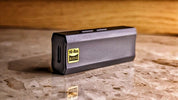
The Fosi Audio DS1 is an absolute legend in the entry-level high-performance mobile tier. Equipped with the highly acclaimed ES9038Q2M SABRE DAC chip, it supports master-tape level decoding up to PCM 32-bit/768kHz and native DSD512.
The Power Factor: Despite its thumb-drive form factor, the DS1 possesses an exceptionally muscular amplification architecture. Offering both 3.5mm single-ended and 4.4mm balanced terminations, it delivers surprising voltage swing and current delivery, easily shaking off the thin, compressed character of generic mobile headphone ports.
If you want to experience the complete spatial width and lower distortion of a fully balanced signal path on a strict budget, the Fosi Audio DS2 is a masterclass in minimalist efficiency. It dual-purposes as a premium digital bridge for both iOS and Android platforms, running an optimized low-noise circuit that keeps the headphone background dead silent.
The Sonic Signature: The DS2 specializes in an ultra-clean, transparent, and uncolored sound signature, allowing you to hear the true native tuning of your multi-driver IEMs or compact over-ear monitors without artificial digital glare.
Optimization Tip: Portable dongles are highly susceptible to radio frequency interference (RFI) radiated from your phone’s 5G and Wi-Fi antennas. Never use unshielded stock cables; route the bitstream via an ultra-short, heavily insulated HiFiMuse Shielded Digital OTG Interconnect to trap cellular hash before it reaches the decoding stage.
Best suited for: Dedicated desktop listening, high-impedance dynamic headphones, and near-field studio monitors.
When your system is anchored to a permanent workspace, power restrictions disappear, and the priority shifts entirely to raw decoding precision, massive current headroom, and extensive physical I/O expansion.

The FiiO K7 remains one of the most logically engineered desktop platforms on the market. Utilizing a fully balanced audio architecture built around dual AKM AK4493SEQ DAC chips and dual THX AAA 788+ amplifier modules, it delivers a deeply organic, warm, and velvety mid-range presentation without sacrificing high-frequency transient speed.
The Synergy: Pushing up to 2 watts of clean power into low-resistance loads via its 4.4mm balanced termination, it easily drives notoriously difficult planar magnetic headphones.

For listeners looking for an "all-in-one" source transformation, the Eversolo DMP-A6 is a modern masterclass. It eliminates the PC completely from your signal chain by embedding a high-performance network streaming engine directly inside a premium aluminum chassis. Armed with dual ES9038Q2M SABRE DACs, full MQA unfolding, and native local NAS indexing, it provides razor-sharp instrument localization and a pristine holographic soundstage.
Optimization Tip: Desktop pillars contain sensitive clock oscillators that are vulnerable to mechanical micro-vibrations from computer cooling fans and typing friction. To sharpen low-end texture, decouple your desktop DAC by placing it onto a HiFiMuse Acoustic Isolation Stand.
Best suited for: Living room entertainment systems, active multi-speaker surround arrays, and television eARC integration.
If your listening habits extend past stereo headphones into cinematic spatial audio, your front-end must possess the processing power to decode multi-channel digital formats natively.

High-end processors in this category utilize flagship DAC chips or dedicated DSP chips to handle Dolby Atmos and DTS-HD Master Audio bitstreams. By integrating HDMI ARC/eARC connectivity, these hubs extract uncompressed multi-channel spatial data directly from your TV, converting it into flawless analog line-outs for multi-channel power amplifiers or active surround speaker arrays.
Audit Your Conversion Architecture: If you prefer razor-sharp micro-details and wide instrumental separation for complex orchestral music, prioritize ESS Sabre platforms (like the Fosi Audio DS1 or Eversolo DMP-A6). If you prefer rich, warm, and natural analog vocal texture, look toward AKM configurations (like the FiiO K7).
Verify the Power Delivery Input: For smartphone connection, ensure your mobile DAC features independent power injection capability to prevent current clamping from your phone's operating system.
Map Your Physical Output Lines: Ensure your desktop hub provides dedicated 4.4mm balanced or rear XLR/RCA lineouts to prevent ground loop crosstalk when connecting to high-current downstream amplifiers.
Are you currently listening via an ultra-portable pocket dongle on your phone, or have you transitioned to a dedicated desktop balanced DAC pillar? Let us know your current signal path routing in the comments section below!