
HiFiMuse Q7 Review Guide: A Desktop DAC, Headphone Amp and Preamp Explained
, ~에 의해 lea li, 7 분 읽기 시간
, ~에 의해 lea li, 7 분 읽기 시간
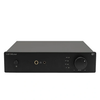
If you are searching for a HiFiMuse Q7 review, the first thing to clarify is the name: this is the desktop HiFiMuse Q7, not the portable FiiO Q7. The HiFiMuse model combines a dual-chip DAC, a headphone amplifier and a preamplifier in one mains-powered component. It accepts music from a computer, phone, streamer, CD transport or other digital source, then sends analogue audio to wired headphones, active speakers or a separate power amplifier.

That combination makes the HiFiMuse Q7 interesting for listeners who want one control center for both headphone and speaker listening. In this guide, we will explain its connections, realistic system roles and buying considerations. For listening impressions, you can also watch Christian Schwarzbeck’s independent German-language video review below.
The HiFiMuse Q7 is a desktop DAC, headphone amplifier and preamp. Its DAC section converts incoming digital audio into an analogue signal. The headphone-amplifier section drives compatible wired headphones through either a 6.35 mm single-ended output or a 4.4 mm balanced output. Its volume-controlled RCA and balanced XLR outputs allow it to serve as a preamp for active speakers or a separate power amplifier.
Internally, the published specification lists two ESS ES9039Q2M DAC chips and a second-generation, eight-core XMOS XU208 USB interface. The unit is powered from AC mains and is designed for a fixed desktop or hi-fi system rather than battery-powered portable use.

Typical setups include:
A standalone headphone amp normally accepts an existing analogue signal and amplifies it for headphones. The HiFiMuse Q7 covers a wider chain: it selects among digital sources, performs digital-to-analogue conversion, controls listening volume and supplies dedicated headphone outputs. When headphones are not the goal, its rear analogue outputs let it become the front end of a speaker system.
This flexibility is useful on a desk where space is limited. A computer can remain connected over USB while a TV, CD transport or compatible streamer uses optical or coaxial input. Bluetooth offers a quick wireless option for a phone or tablet. Output can then go to headphones or onward to a speaker system.
However, “preamp” does not mean “speaker power amplifier.” The HiFiMuse Q7 outputs a line-level signal through RCA or XLR; it does not provide speaker terminals and cannot drive passive loudspeakers directly. Passive speakers need a separate power amplifier or integrated amplifier. Active speakers already contain amplification and can accept the Q7’s appropriate line output directly.

For a desktop computer, USB-B is the most direct high-resolution connection. The published specification lists support up to PCM 32-bit/384 kHz and DSD512 over USB. Windows 7–11, macOS, Android and iOS are listed as compatible systems, although the required cable, adapter or Windows driver depends on the source device.
The optical and coaxial S/PDIF inputs are specified up to 24-bit/192 kHz. They are practical for compatible televisions, CD transports, network streamers and other digital sources. They also provide an alternative when USB is unavailable or inconvenient. Check the output options on your source before choosing a cable.
The HiFiMuse Q7 uses a Qualcomm QCC3040 Bluetooth chipset and supports aptX HD, aptX Low Latency, aptX, AAC and SBC according to the published specifications. The codec actually used is negotiated with the transmitting device, so phone and operating-system support matters. Bluetooth prioritizes convenience; USB, optical and coaxial provide the wired alternatives.
The front panel offers 6.35 mm single-ended and 4.4 mm balanced headphone connections. The listed impedance ranges are 16–300 ohms for 6.35 mm and 16–600 ohms for 4.4 mm. Published output figures are 360 mW at 16 ohms and 28 mW at 300 ohms from 6.35 mm, and 1,000 mW at 16 ohms and 56 mW at 600 ohms from 4.4 mm. These figures help with matching, but impedance alone does not determine how difficult a headphone is to drive; sensitivity and the desired listening level also matter.
On the rear, balanced XLR and RCA preamp outputs connect the Q7 to downstream equipment. Choose XLR when the receiving component has compatible balanced inputs and the installation benefits from that connection; RCA remains appropriate for many domestic amplifiers and powered speakers.
Specifications explain compatibility, but they cannot replace hands-on use or listening impressions. Christian Schwarzbeck of China-HiFi takes a closer look at the HiFiMuse Q7 in this German-language review. Watch the full video for his presentation of the unit and his independent perspective.
Watch Christian’s complete HiFiMuse Q7 review on YouTube
The HiFiMuse Q7 makes the most sense for someone building a stationary digital listening system. It may suit you if you want to alternate between balanced and single-ended wired headphones, connect several kinds of digital source, or use the same DAC and volume control with headphones and speakers.
It is also a logical fit for a desktop or compact hi-fi system in which USB is the main input but Bluetooth remains useful for guests or casual playback. Owners of active monitors can use the analogue line outputs, while a traditional passive-speaker system can place the Q7 before a suitable power amplifier.
It is less suitable if you need a portable battery DAC/amp, HDMI ARC for a television, direct speaker amplification or a network streamer built into the same chassis. Buyers whose headphones use other plug formats should also plan for a suitable cable or adapter and confirm electrical compatibility.
Yes, but the signal path differs. With headphones, connect a compatible 6.35 mm or balanced 4.4 mm plug to the front output and begin at a low volume. For active speakers, run RCA or XLR from the Q7 to the speakers’ analogue inputs, following the speaker manufacturer’s instructions for gain and volume.
For passive speakers, the correct chain is source → HiFiMuse Q7 → power amplifier → passive speakers. The separate amplifier supplies the power the speakers require. Never connect bare speaker wire directly to the Q7’s line outputs. Before changing outputs or cables, reduce the volume and switch equipment off where the manufacturers recommend it.
First, confirm your sources and cables. USB-B, optical, coaxial and Bluetooth cover many digital systems, but there is no HDMI ARC input. If a television is part of the setup, verify that it can output compatible optical audio.
Second, check the complete output chain. Headphones should fall within the published range and still need adequate sensitivity for your preferred volume. Active speakers need a compatible analogue input. Passive speakers require a separate amplifier.
Third, select the correct mains-voltage version for your location. The manual specifically warns that the voltage-selector setting must match the local power grid. Verify this before powering the unit. Finally, allow space for rear cables and the Bluetooth antenna, and remember that high-resolution file support describes technical capability—not a guarantee that every recording, source or headphone will sound better.
The strongest case for the HiFiMuse Q7 is not any single number. It is the way the unit combines digital input selection, dual ES9039Q2M conversion, single-ended and balanced headphone outputs, and RCA/XLR preamp connectivity in one desktop component. That makes it a flexible hub for listeners who want to move between private headphone sessions and a properly amplified speaker system.
Before deciding, compare its connections and power figures with your actual equipment, then use an independent review to add real-world context. View the HiFiMuse Q7 specifications and available version at EMIUZEK, and watch Christian Schwarzbeck’s full video above for a closer German-language look.