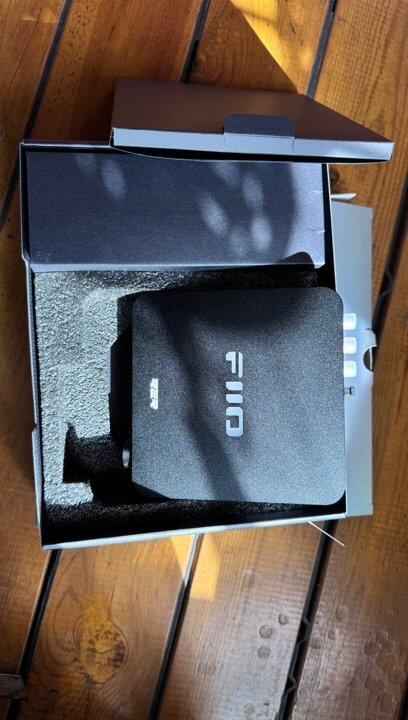
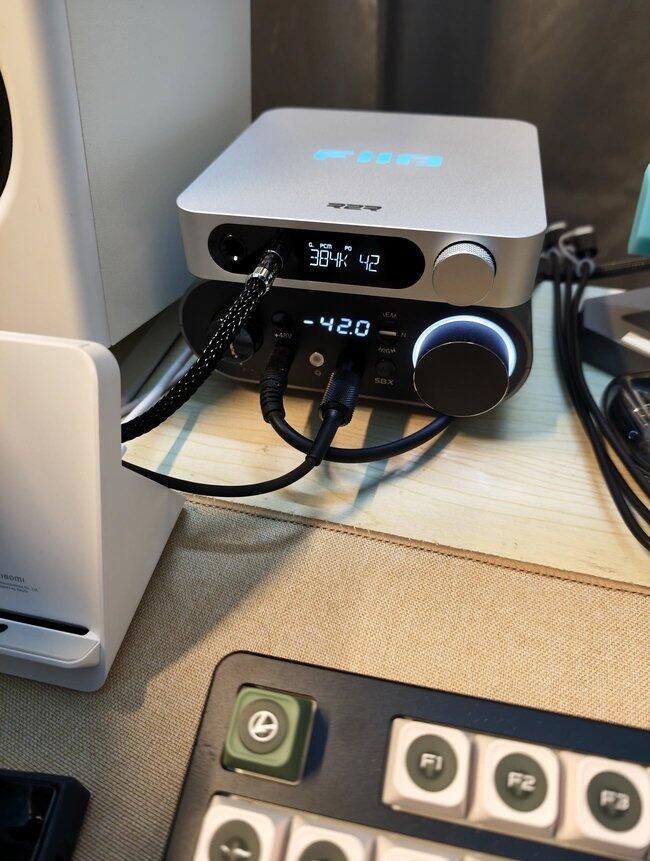
FiiO K11 R2R
FiiO K11 R2R
$139.49
- Authorized Dealer · Tech Support · See Return Policy
👏Buy 2 Save 8% · Buy 3 Save 10% Auto


$139.49
We help you choose, connect and maintain your system—not just ship a box.
The following product descriptions, specifications and images are provided by the manufacturer.
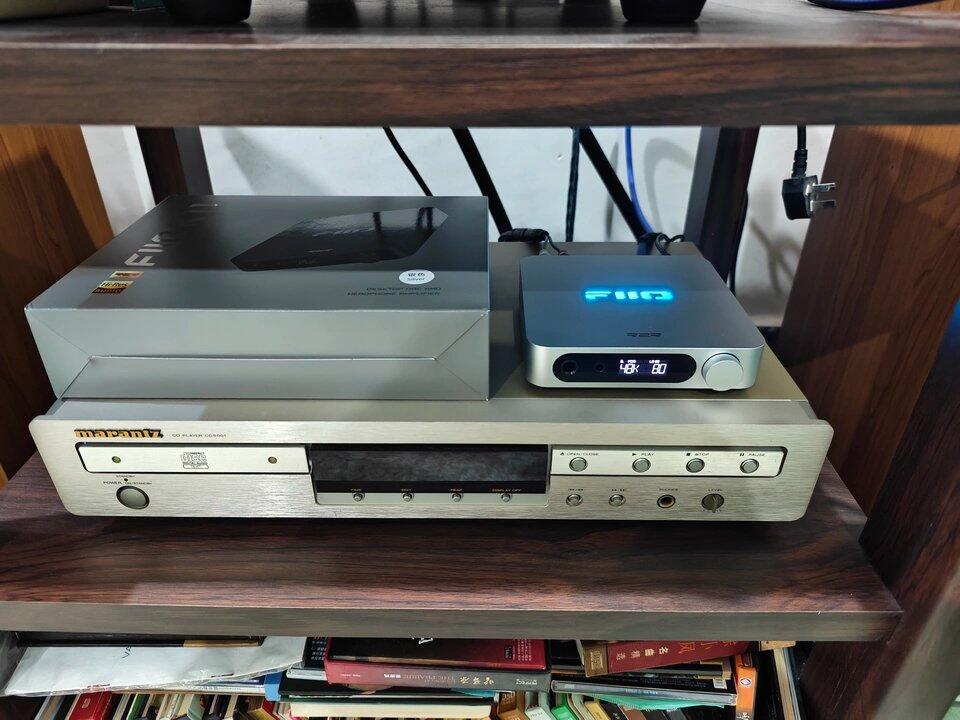
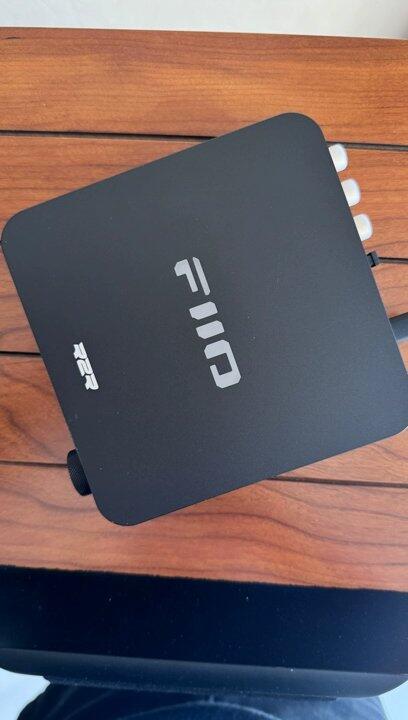
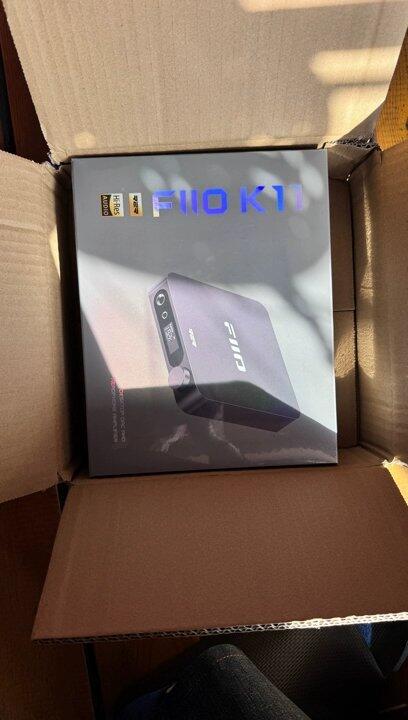
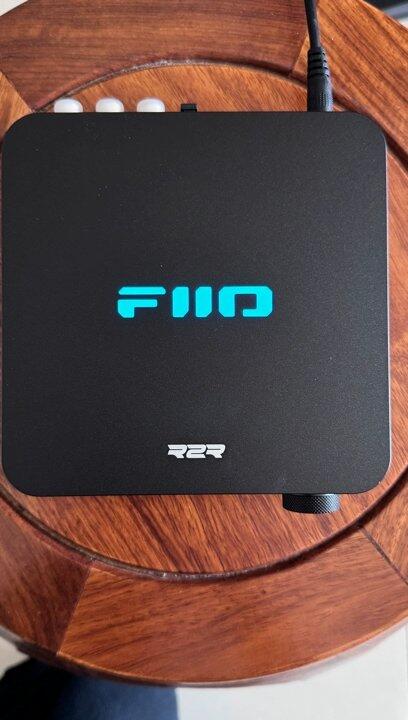
FiiO K11 R2R is a compact desktop DAC and headphone amplifier for listeners who specifically want an affordable resistor-ladder design rather than the more conventional delta-sigma architecture used in the standard K11.
Its four-channel fully differential 24-bit R2R network uses 192 precision thin-film resistors and offers selectable NOS and OS playback. USB-C, optical and coaxial inputs cover common desktop and television sources, while 6.35mm and 4.4mm headphone outputs plus RCA line and preamplifier modes allow it to serve both headphones and a stereo system.
FIIO’s four-channel fully differential 24-bit resistor ladder uses 192 precision thin-film resistors, making the K11 R2R a practical entry point for listeners who want to try R2R conversion without buying a separate high-priced DAC.
NOS sends the signal through the ladder without digital oversampling, while OS upsamples to 384kHz before conversion. The two modes let you compare a more direct R2R presentation with a cleaner, more controlled alternative.
The 4.4mm balanced output reaches up to 1300mW + 1300mW at 32Ω, while the 6.35mm output, three gain levels and electronic volume control support a wider range of full-size headphones and earphones.
Use USB-C, optical or coaxial input, listen through headphones, or switch the RCA output between fixed line level and variable preamplifier mode for an external amplifier or active speakers.


Choose K11 R2R if the resistor-ladder design, fuller vocal presentation and the ability to switch between NOS and OS are the main reasons for buying. The standard K11 uses a conventional delta-sigma DAC, offers digital-filter choices and has better measured distortion and noise performance. The R2R version is an alternative tuning and architecture, not an automatic upgrade in every area.
NOS avoids digital oversampling and preserves the direct R2R conversion path; many listeners choose it for a denser, more relaxed presentation. OS upsamples to 384kHz before conversion and generally presents edges and detail more cleanly. The setting does not increase amplifier power, and the preferred mode depends on the headphones and recording.
A 6.35mm headphone can be used normally and does not need to be recabled. The 4.4mm balanced output provides the highest power—up to 1300mW + 1300mW at 32Ω—and is useful for compatible, less sensitive headphones. Choose low, medium or high gain according to headphone sensitivity and start with the volume low.
It can be used with IEMs through the 6.35mm output and low gain, but the R2R model does not have the lowest noise figures in the K11 family. Extremely sensitive earphones may reveal more background noise than less sensitive headphones; buyers who consider silence between tracks the top priority should compare the standard K11.
Yes. Connect the rear RCA output to an amplifier or active speakers. Use LO for a fixed-level signal when another device controls volume, or PRE when you want the K11 R2R knob to control the output level. It has no XLR line output and cannot power passive speakers directly.
Yes, through optical input when the television can output two-channel PCM. If there is no sound, change the TV’s digital-audio setting from Dolby or bitstream to PCM. The K11 R2R does not include HDMI ARC.
No. It has no Bluetooth receiver, Bluetooth transmitter or analog audio input. Available sources are USB-C, optical and coaxial digital audio.
Yes, but only when USB is selected as the input. It is not a general-purpose digital pass-through for optical or coaxial input sources.
Mac computers normally use USB Audio without an additional driver. Windows users may need FIIO’s USB driver for the highest sample rates and native DSD. UAC 1.0 mode improves compatibility with devices that do not support UAC 2.0, although the available formats may be reduced.
Source icon: Computer
Source: PC / Mac
Connection: USB-C
Output connection: Headphone output
Target icon: Headphones
Output: 6.35mm / 4.4mm
Note: Select USB input, choose low, medium or high gain for the headphones, and begin with the volume low.
Source icon: TV
Source: Television
Connection: Optical
Output connection: Headphone output
Target icon: Headphones
Output: 6.35mm / 4.4mm
Note: Set the television’s digital-audio output to two-channel PCM; Dolby or bitstream output may produce no sound.
Source icon: Streaming Service
Source: Computer / digital transport
Connection: USB-C / optical / coaxial
Output connection: RCA LO / PRE
Target icon: Amplifier
Output: Amplifier / active speakers
Note: Use LO when the receiving device controls volume, or PRE when the K11 R2R controls volume. Passive speakers require an amplifier.
| Feature | Specification |
|---|---|
| Product type | Desktop DAC and headphone amplifier |
| DAC architecture | FiiO-developed four-channel fully differential 24-bit R2R resistor array |
| Resistor network | 192 precision thin-film resistors, 0.1% tolerance |
| Operating modes | NOS / OS |
| System controller | GD32F303RE |
| USB receiver | SA9312L |
| Amplifier stage | 2 × SGM8262 |
| Volume control | NJW1195A electronic volume controller |
| USB-C decoding | PCM up to 384kHz/32-bit; native DSD256 |
| Optical decoding | PCM up to 96kHz/24-bit |
| Coaxial input decoding | PCM up to 192kHz/24-bit |
| USB Audio modes | UAC 1.0 / UAC 2.0 |
| Coaxial digital output | Available only when USB is selected as the input |
| Digital inputs | USB-C, Toslink optical, coaxial RCA |
| Headphone outputs | 6.35mm single-ended; 4.4mm balanced |
| Analog line output | Stereo RCA |
| Output modes | PO: headphone output; PRE: variable RCA; LO: fixed-level RCA |
| 6.35mm output power | ≥660mW + 660mW at 16Ω; ≥460mW + 460mW at 32Ω; ≥50mW + 50mW at 300Ω |
| Output impedance | <1Ω |
| 6.35mm SNR / noise floor | ≥115dB A-weighted / <7.2μV A-weighted |
| 6.35mm performance | THD+N approx. 0.025%; dynamic range ≥107dB; crosstalk ≥72dB |
| 4.4mm balanced output power | ≥520mW + 520mW at 16Ω; ≥1300mW + 1300mW at 32Ω; ≥220mW + 220mW at 300Ω |
| Output impedance | <1.5Ω |
| 4.4mm SNR / noise floor | ≥115dB A-weighted / <14.1μV A-weighted |
| 4.4mm performance | THD+N approx. 0.025%; dynamic range ≥107dB; crosstalk ≥107dB |
| RCA line output level | 2.7Vrms |
| RCA SNR / noise floor | ≥115dB A-weighted / <5.1μV A-weighted |
| RCA performance | THD+N approx. 0.025% at 1kHz/10kΩ; dynamic range ≥107dB; crosstalk ≥111dB |
| Power input | DC 12V / 2A; no internal battery |
| Dimensions | 147 × 133 × 32.3mm |
| Weight | Approx. 420g |
We provide tracked international shipping with delivery options and estimated delivery times shown during checkout.
All products sold by EMIUZEK are genuine products with manufacturer warranty support.
Our HiFi specialists provide assistance with compatibility, setup, and technical questions.
Eligible returns are available according to our return policy.
Please contact EMIUZEK before returning any product so we can provide assistance.