Why it stands out
Best for
Not ideal for
Shop with confidence
Why buy from EMiUZEK
We help you choose, connect and maintain your system—not just ship a box.
- Authentic products
- Compatibility guidance
- Fast tracked shipping
- Firmware and driver support
- Clear warranty process
- Responsive after-sales help
Setup guide
How to connect
What you should know
EMiUZEK buying notes
Frequently asked questions
View full technical specifications
Official product information provided by Fiio
The following product descriptions, specifications and images are provided by the manufacturer.
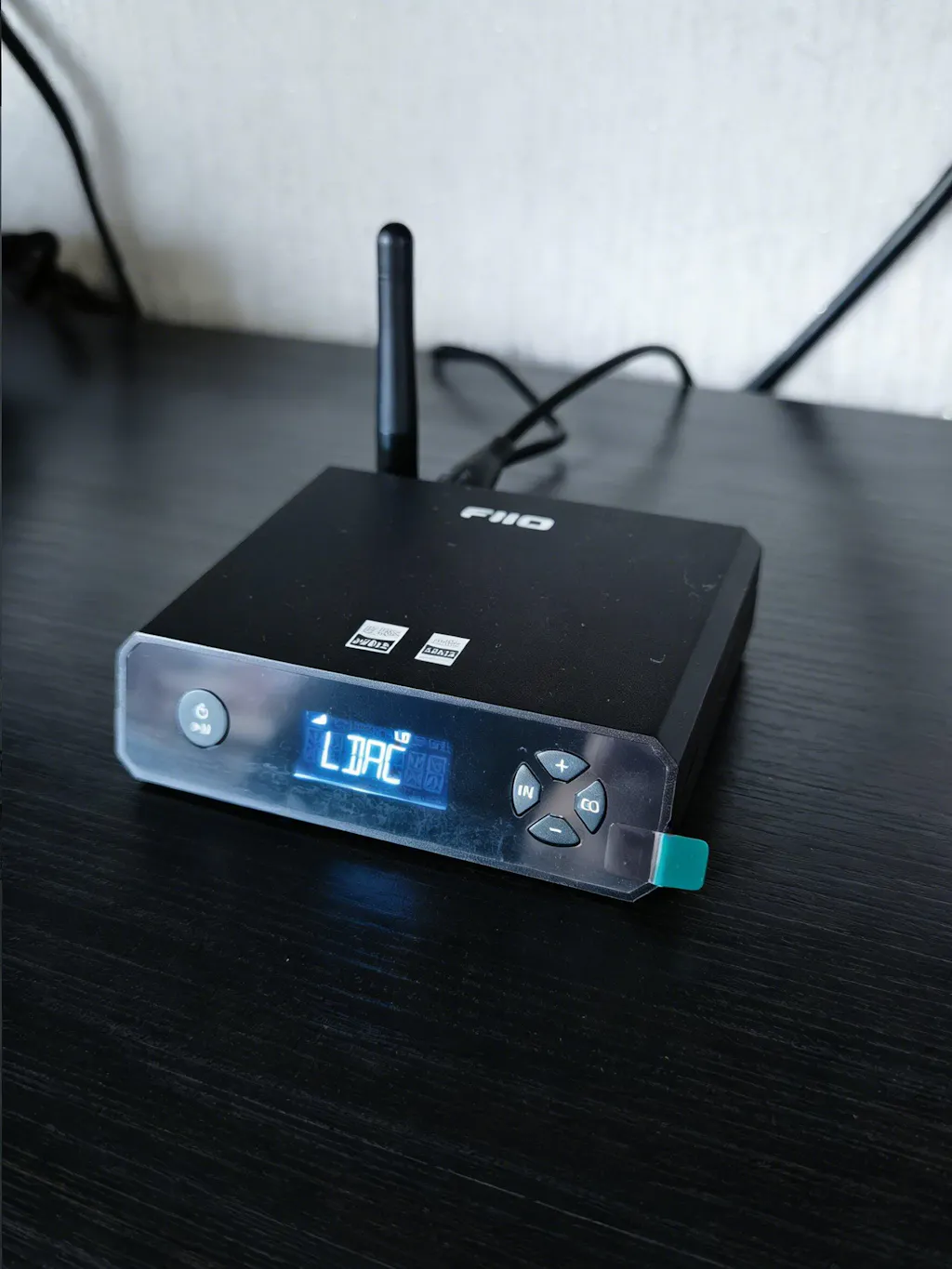
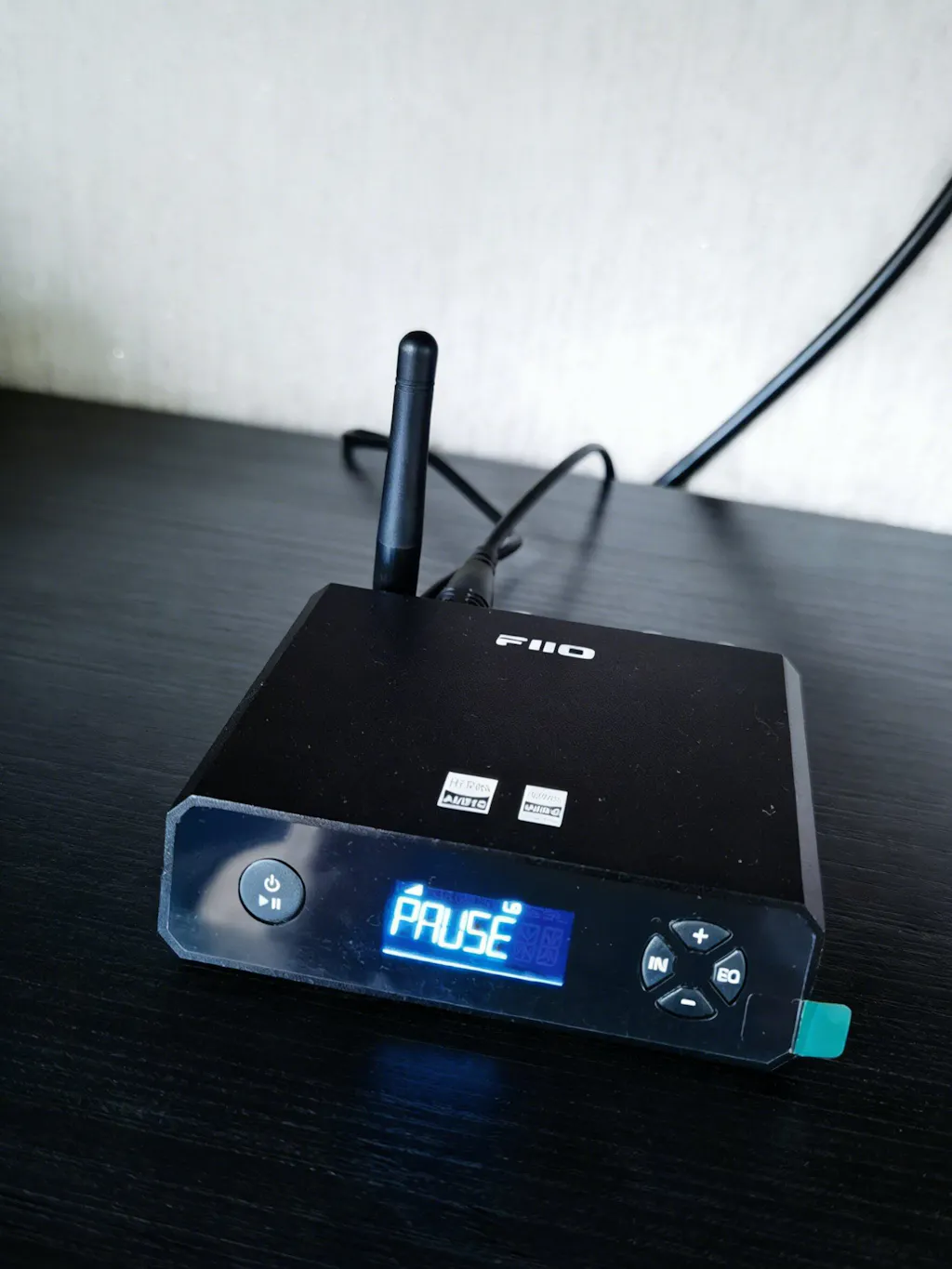
The FiiO BR13 is a compact Bluetooth receiver, USB DAC and S/PDIF converter designed to add modern wireless and digital connectivity to an existing amplifier, receiver or active-speaker system. It receives audio through Bluetooth, USB-C, optical or coaxial input and outputs through stereo RCA, optical or coaxial connections.
A Qualcomm QCC5125 Bluetooth platform supports LDAC and multiple aptX codecs, while the ES9018K2M DAC and TPA1882 op-amp provide a standard 2Vrms RCA line output. The BR13 is a source component only: it has no headphone amplifier, speaker amplifier, battery or network-streaming platform.
Why it stands out
LDAC and aptX Adaptive Bluetooth reception
Bluetooth 5.2 supports LDAC, aptX Adaptive, aptX HD, aptX Low Latency, aptX and SBC from compatible phones, tablets and computers.
Bluetooth, USB DAC and S/PDIF conversion
Use one small component for wireless reception, computer audio, television audio and conversion between optical, coaxial and analog RCA systems.
ES9018K2M DAC with 2Vrms RCA output
The internal ESS DAC and TPA1882 analog stage allow direct connection to a line-level amplifier input or active speakers without requiring a separate DAC.
App control, PEQ and digital routing tools
FiiO Control provides Bluetooth codec settings, presets, custom PEQ, channel balance, upsampling, low-latency mode and OTA firmware updates.
Best for
- Adding high-resolution Bluetooth reception to an older amplifier or active speakers
- Converting television optical or coaxial audio to RCA line output
- Using a computer or compatible console with a simple UAC1.0 USB DAC
- Routing optical and coaxial digital signals between existing audio components
Not ideal for
- Users who need Bluetooth transmission to wireless headphones
- Anyone who wants Wi-Fi, AirPlay, Roon Ready or native streaming-service support
- Driving headphones, passive speakers or a power amplifier that requires balanced input
- Portable use without a continuous USB power source


EMiUZEK Buying Notes
- The BR13 is a Bluetooth receiver, not a transmitter. It accepts audio from a phone or computer and sends it to wired audio equipment.
- RCA is a 2Vrms line-level output with digital volume adjustment, not a powered headphone or speaker output. A downstream amplifier or active speakers are required.
- FiiO Control connects only while the BR13 is in Bluetooth input mode. Saved settings such as upsampling can remain active after switching inputs, but EQ works only with Bluetooth and USB input.
- Digital upsampling can prevent sound from some optical or coaxial devices. If a digital output is silent or incompatible, disable upsampling or enable the appropriate compatibility setting.
Frequently asked questions
Can the FiiO BR13 transmit Bluetooth audio?
No. It receives Bluetooth audio from a phone, tablet, television or computer. It cannot send audio to Bluetooth headphones or wireless speakers.
Does the BR13 support Wi-Fi streaming?
No. It has no Wi-Fi, AirPlay, Chromecast, Spotify Connect or Roon Ready function. Use Bluetooth, USB, optical or coaxial input.
Can I connect headphones directly?
No. It has no headphone socket or headphone amplifier. Connect RCA output to a separate headphone amplifier.
Can it drive passive speakers?
No. Connect it to an integrated amplifier, receiver, power amplifier with suitable input sensitivity or active speakers.
Which Bluetooth codecs are supported?
It supports SBC, aptX, aptX LL, aptX HD, aptX Adaptive and LDAC. Codec availability depends on the transmitting device and enabled settings.
Does it support AAC?
AAC is not included in FiiO's official BR13 codec list. Apple devices can connect using a mutually supported codec, normally SBC.
Can two phones stay connected simultaneously?
Yes. Bluetooth multipoint supports two transmitting devices. Pause playback on one before starting the other.
What is the maximum Bluetooth range?
FiiO states a transmission distance of up to approximately 30 metres under favourable open conditions. Walls, interference and the source device can reduce the practical range.
What does low-latency mode do?
It prioritizes aptX Low Latency where the transmitter also supports it, reducing delay for video and gaming. Both ends must support the codec for the benefit to apply.
Can I use it as a USB DAC?
Yes. USB-C supports UAC1.0 plug-and-play operation up to PCM 96kHz/24-bit with compatible computers, phones, PS5 and Nintendo Switch systems.
Does the USB-C port carry both power and audio?
Yes. It is a two-way USB-C power/data connection. The BR13 has no battery and requires a stable 5V/1A USB supply during operation.
What are the maximum optical and coaxial input rates?
Coaxial input supports up to PCM 192kHz/24-bit, while optical input supports up to PCM 96kHz/24-bit.
What are the maximum digital output rates?
Optical and coaxial output support up to PCM 96kHz/24-bit when using the BR13's frequency-doubling or conversion functions.
Can it convert optical input to RCA output?
Yes. Optical input can be decoded to RCA and can also be routed to optical or coaxial digital output.
Can it convert coaxial input to optical output?
Yes. In Coaxial In mode, the BR13 can provide optical and RCA output.
What is optical bypass?
In Optical In mode, the optical signal can pass through to Optical Out while the BR13 also supports other compatible outputs, simplifying systems that share one optical source.
Can optical and coaxial outputs work simultaneously?
Output availability depends on the selected input and routing mode. Optical input can provide coaxial, optical and RCA output; coaxial input provides optical and RCA output.
Why is there no sound from optical or coaxial output?
Confirm that the source uses supported stereo PCM, select the correct input and disable digital upsampling in FiiO Control if the receiving device cannot accept the converted rate.
Does PEQ work with optical and coaxial input?
No. FiiO specifies EQ support only for Bluetooth and USB input. Other saved system settings may still affect S/PDIF modes.
Does upsampling improve every source?
Upsampling changes the output sample rate but cannot recreate information absent from the source. Its audible benefit is system-dependent and compatibility should take priority.
Can the BR13 control active-speaker volume?
Yes, its 60-step digital volume can adjust RCA output. Begin at a low level, especially when connecting directly to active speakers.
Is the BR13 the same kind of product as the FiiO SR11?
No. BR13 focuses on Bluetooth reception, USB DAC and S/PDIF conversion with analog RCA output. SR11 is a Wi-Fi/Ethernet digital streaming transport with Roon Ready and AirPlay but no analog output.
HOW TO CONNECT
Phone to an existing amplifier
Source icon: Phone
Source: Smartphone / tablet
Connection: Bluetooth 5.2
Output connection: Stereo RCA line output
Target icon: Amplifier
Output: AUX / LINE / CD input on an amplifier or receiver
Note: Select Bluetooth input, pair the phone and begin with low system volume. Bluetooth is received by the BR13 and output through wired RCA.
Television to active speakers
Source icon: TV
Source: Television optical output
Connection: TOSLINK optical input
Output connection: Stereo RCA line output
Target icon: Active speakers
Output: Powered-speaker RCA input
Note: Set the television to compatible stereo PCM. If there is no sound, disable BR13 digital upsampling and recheck the TV format.
Computer USB DAC
Source icon: Computer
Source: PC / Mac / compatible console
Connection: USB-C UAC1.0
Output connection: Stereo RCA line output
Target icon: Audio system
Output: Amplifier, receiver or active speakers
Note: Select USB input and choose BR13 as the source device's audio output; USB supports up to PCM 96kHz/24-bit.
S/PDIF format conversion
Source icon: Digital source
Source: TV / set-top box / disc player
Connection: Optical or coaxial input
Output connection: Optical, coaxial or RCA according to input mode
Target icon: DAC or audio system
Output: Compatible external DAC, amplifier or active speakers
Note: Coaxial input can output optical and RCA; optical input can output optical, coaxial and RCA. Match the sample-rate capability of the receiving device.
Technical Specifications
| Feature | Specification |
|---|---|
| Product type | Bluetooth receiver, USB DAC and S/PDIF converter |
| DAC / op-amp | ESS ES9018K2M / TPA1882 |
| Bluetooth chipset | Qualcomm QCC5125 |
| Bluetooth | 5.2 receive-only; multipoint supported |
| Bluetooth codecs | SBC, aptX, aptX LL, aptX HD, aptX Adaptive, LDAC |
| Inputs | Bluetooth, USB-C, optical, coaxial |
| Outputs | Stereo RCA, optical, coaxial |
| USB DAC | UAC1.0; up to PCM 96kHz/24-bit |
| Coaxial input | Up to PCM 192kHz/24-bit |
| Optical input | Up to PCM 96kHz/24-bit |
| Optical / coaxial output | Up to PCM 96kHz/24-bit |
| RCA output | 2Vrms; 60-step digital volume |
| EQ | Preset EQ plus two 10-band custom PEQ profiles; Bluetooth and USB input only |
| Display | 1.1-inch LCD |
| Control | Front buttons and FiiO Control app |
| Firmware | OTA update through FiiO Control |
| Power | USB-C 5V/1A; no battery |
| Dimensions | Approx. 98 × 96 × 26.5mm |
| Weight | Approx. 135g |
| Color | Black |
What's in the box, manuals and downloads
- FiiO BR13 ×1
- USB-A to USB-C Data/Power Cable ×1
- User Manual ×1
- Warranty Card ×1
Visit the EMiUZEK download center.
Additional Product Content
FiiO BR13 vs SR11
| Feature | BR13 | SR11 |
|---|---|---|
| Main purpose | Bluetooth receiver, USB DAC and S/PDIF converter | Wi-Fi/Ethernet digital streaming transport |
| Network streaming | No | Roon Ready and AirPlay |
| Bluetooth reception | Yes, including LDAC | Yes with supported firmware |
| Analog RCA output | Yes, 2Vrms | No |
| Digital outputs | Optical and coaxial | USB-A, USB-C, optical and coaxial |
| Best reason to choose | Add Bluetooth and analog output to an existing system | Add Roon/AirPlay network streaming to an external DAC |
What's in the box, manuals and downloads
Shipping, warranty and returns
Worldwide Tracked Shipping
We provide tracked international shipping with delivery options and estimated delivery times shown during checkout.
Official Warranty Support
All products sold by EMIUZEK are genuine products with manufacturer warranty support.
Our HiFi specialists provide assistance with compatibility, setup, and technical questions.
Easy Returns
Eligible returns are available according to our return policy.
Please contact EMIUZEK before returning any product so we can provide assistance.