
The Stereo Sweet Spot: Monoblocks, Bi-Amping, and Power Isolation for High-Current Amplifiers Hi-Fi Upgrade & Optimization Guide #11
, ~에 의해 Kai @ EMiUZEK Team, 5 분 읽기 시간
, ~에 의해 Kai @ EMiUZEK Team, 5 분 읽기 시간
High-current amplifiers require pristine electrical power and structural isolation to deliver true dynamic range. In Day 11 of our guide, we compare the architectural advantages of monoblocks versus biamplification setups, break down the physical threat of channel crosstalk, and provide an actionable blueprint to isolate your power lines from noisy digital components.
Yesterday, we built the ultimate digital front-end by configuring the Eversolo DMP-A6 as a dedicated digital transport, delivering a clean, bit-perfect signal to an external DAC.
With your streaming and conversion stages fully optimized, that pristine signal now reaches the true powerhouse of any audio system: the amplifier.
For many enthusiasts, upgrading amplification is where the most dramatic improvements begin. Yet despite investing in powerful amplifiers, many systems still suffer from compressed dynamics, weak bass control, congested soundstages, or reduced instrument separation.
In most cases, the limitation is not the amplifier itself.
It is how the amplifier is configured, powered, and integrated into the system.
Welcome to Day 11 of our Hi-Fi Upgrade & Optimization Guide series. Today, we explore how amplifier architecture and power management influence system performance, and how proper isolation can unlock the stereo sweet spot hidden within your setup.
As systems move beyond entry-level integrated amplifiers, two upgrade paths become increasingly popular: Monoblock amplification and Bi-Amping.
While both approaches aim to improve performance, they achieve it in very different ways.
A conventional stereo amplifier houses both left and right channels within a single chassis, often sharing a common power supply and transformer.
During demanding musical passages, both channels compete for available current. Large bass transients in one channel can subtly influence the performance of the other, reducing channel separation and limiting soundstage precision.
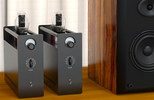
Monoblock amplifiers eliminate this compromise.
Each speaker receives its own dedicated amplifier chassis, power supply, and transformer.
Benefits include:
Complete electrical isolation between channels
Reduced crosstalk
Improved stereo imaging
Greater dynamic headroom
Better low-frequency authority
The result is a wider, deeper soundstage with more precise instrument placement and enhanced control during demanding musical peaks.
Many higher-end loudspeakers feature dual binding posts designed specifically for bi-amping.
Instead of one amplifier driving the entire speaker, separate amplifier channels are assigned to different frequency ranges.
Typically:
One amplifier drives the tweeter section
One amplifier drives the woofer section
This separation reduces electrical interaction between drivers and prevents large bass currents from influencing delicate high-frequency signals.
Benefits include:
Cleaner treble reproduction
Improved midrange clarity
Better bass control
Increased overall transparency
Reduced intermodulation distortion
When properly implemented, bi-amping often creates a more effortless and refined presentation, especially in complex recordings.
An amplifier is ultimately a device that transforms wall power into music.
No matter how advanced the amplifier may be, it can only perform as well as the electricity feeding it.
High-current amplifiers are particularly sensitive to power contamination, voltage fluctuations, and electromagnetic interference.
Modern digital devices constantly generate high-frequency switching noise.
Common sources include:
Streamers
Computers
Network switches
Routers
OLED displays
When these devices share power distribution with your amplifier, unwanted electrical noise can enter the audio chain.
For best results:
Use separate wall outlets whenever possible
Isolate amplifiers from computers and networking equipment
Utilize dedicated analog sections on quality power distributors
Reducing shared electrical noise often lowers the perceived noise floor and improves micro-detail retrieval.
While power cables cannot create information that is not already present in the recording, they can help reduce electrical contamination entering sensitive audio equipment.
Look for cables featuring:
Heavy-gauge conductors
High-purity copper
Effective shielding
Quality connectors
Proper shielding helps contain electromagnetic radiation while maintaining stable current delivery during large dynamic swings.
The benefits are often most noticeable in bass impact, dynamic contrast, and overall system quietness.
Amplifiers are electrical devices, but they are also mechanical structures.
Power transformers vibrate continuously at mains frequency, while nearby speakers generate substantial acoustic energy that travels through furniture and flooring.
These vibrations can affect sensitive internal components over time.
Placing amplifiers on a stable, vibration-controlled platform can help reduce unwanted resonance and improve system consistency.
A dedicated isolation platform such as the HiFiMuse Acoustic Isolation Stand helps dissipate structural vibration before it reaches the amplifier chassis.
Listeners often report:
Tighter bass articulation
Cleaner transients
Improved focus
Better low-level detail retrieval
When amplifier architecture, power delivery, and vibration control work together, the entire system becomes more effortless.
Bass gains greater authority and texture.
Vocals become more focused and dimensional.
Instrument separation improves.
Most importantly, the music emerges from a quieter background, allowing dynamic contrasts and emotional nuances to become more apparent.
The presentation feels less strained, more natural, and significantly more engaging.
A high-quality digital source and DAC can only perform to their full potential when supported by an equally optimized amplification stage.
Whether you choose monoblock amplifiers for ultimate channel separation or bi-amping for enhanced driver control, proper power management and mechanical isolation remain critical components of the performance equation.
The stereo sweet spot is not created by a single component.
It emerges when every stage of the signal chain works together without compromise.
Tomorrow, in Day 12 of our Hi-Fi Upgrade & Optimization Guide, we leave the equipment rack behind and focus on one of the most overlooked upgrade opportunities in audio:
Room Boundary Physics — How to eliminate muddy bass and harsh reflections without sacrificing your room's appearance.
See you tomorrow.
Are you currently using a traditional stereo amplifier, monoblocks, or a bi-amped system?
What changes made the biggest difference in reducing noise and improving amplifier performance in your setup?
Share your experience in the comments below.