

Sonos Ace Ultra vs Sonos Ace: Is the Upgrade Worth It?
, by EMiUZEK Editorial Team, 8 min reading time
, by EMiUZEK Editorial Team, 8 min reading time
Updated for launch day: a practical Sonos Ace Ultra vs Sonos Ace comparison covering headphone linking, Adaptive ANC, sound controls, battery life and who should upgrade.
Sonos Ace Ultra is the more capable headphone, but most Sonos Ace owners should not upgrade automatically. The meaningful gains are direct Sonos system linking over WiFi, stronger adaptive noise cancellation, a more flexible EQ, five additional hours of rated battery life, and replaceable service parts. If you mainly use Bluetooth, USB-C, or TV Audio Swap and your current Ace already fits your needs, the original model remains the better-value choice.
This comparison separates confirmed specifications from early listening impressions so you can decide whether the new model solves a real problem. Sonos Ace Ultra reached general availability on September 29, 2026. EMiUZEK currently sells the original Sonos Ace Headphones S49; an Ace Ultra product or preorder page has not yet been added to our store.
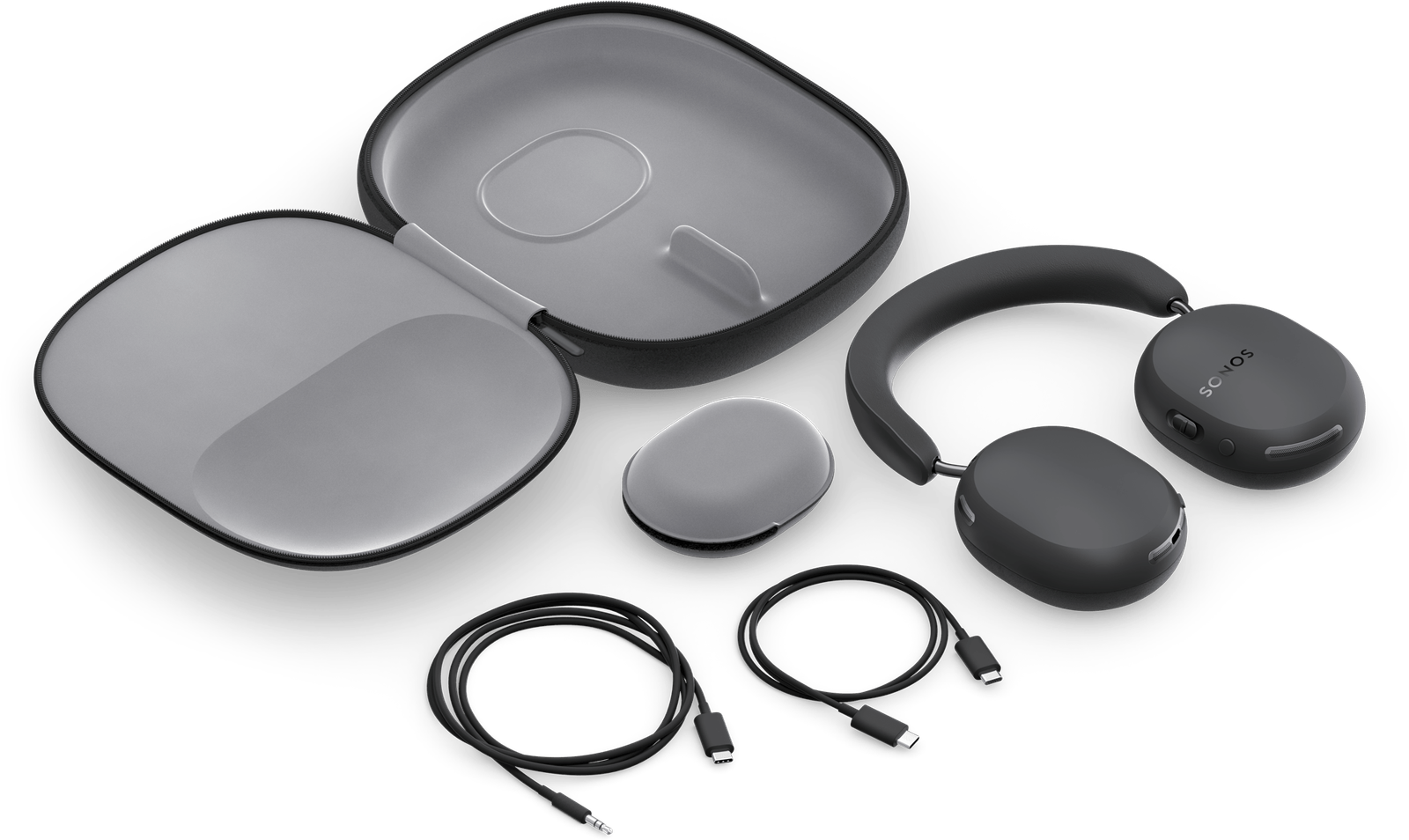
Sonos Ace Ultra is now officially on sale rather than only available for preorder. Availability can vary by country and retailer. EMiUZEK does not yet have an Ace Ultra product page, so this article does not provide a purchase link, price promise or stock claim for the new model. Buyers who need immediate delivery should verify regional stock and return terms before ordering.
The launch does not change the upgrade decision below: existing Ace owners should upgrade only when system-wide headphone linking, Adaptive ANC, expanded EQ or a replaceable battery solves a real limitation.
Buy Ace Ultra if you want the closest possible integration with a Sonos home system, especially the ability to move music between compatible Sonos speakers and the headphones. It is also the stronger choice for frequent travelers who value adaptive ANC, longer battery life and repairability.
Choose the original Ace if price matters more, you mostly listen over Bluetooth or USB-C, or you already own Ace and are satisfied with its sound and noise cancellation. Both models support TV Audio Swap with compatible Sonos soundbars, spatial audio, Dolby Atmos content, dynamic head tracking, USB-C audio and a 3.5 mm connection through the supplied cable.
| Feature | Sonos Ace | Sonos Ace Ultra |
|---|---|---|
| List price | US$349 current MSRP | US$449 |
| Drivers | Custom 40 mm | Redesigned Sonos 40 mm driver |
| Microphones | 8 | 10 |
| Noise control | ANC and Aware Mode | Adaptive ANC and Aware Mode with Voice Boost |
| EQ | Bass, treble and Loudness | 3-band or 8-band EQ, Loudness and Adaptive EQ |
| Battery with ANC or Aware Mode | Up to 30 hours | Up to 35 hours |
| Sonos integration | TV Audio Swap | TV Audio Swap plus headphone linking in Early Access |
| Bluetooth | Bluetooth 5.4 | Bluetooth 6.0 |
| Serviceability | Replaceable ear cushions | Replaceable ear cushions and battery |
| Weight | 312 g | 322 g |
The most important Ace Ultra feature is not the extra battery time. Headphone linking lets Ace Ultra connect directly to compatible Sonos products over WiFi. In Early Access, pressing the Content Key can push audio from the Sonos system to the headphones or pull it back to the speakers. This can include music already playing in another room and, with compatible equipment, line-in sources such as a turntable.
This is different from TV Audio Swap. The original Ace can already receive television audio from a compatible Sonos soundbar. Headphone linking expands the idea beyond the TV and makes Ace Ultra behave more like part of the wider Sonos system. However, Sonos labels the feature Early Access: it is opt-in, requires compatible Sonos hardware, WiFi and the Sonos app, and may change during development. Check compatibility for your exact speakers before buying.
If your home listening is built around Sonos speakers, this feature can justify the price difference. If you use the headphones mainly on a phone, laptop or airplane, it may add little practical value.

Ace Ultra uses ten microphones rather than eight and changes ordinary ANC into Adaptive ANC. The system monitors the environment and acoustic leaks caused by movement, hair or glasses, then adjusts the cancellation. Sonos claims up to twice the cancellation of Ace at frequencies up to 65 Hz. That claim is most relevant to low-frequency travel noise such as engines and ventilation, but it should not be interpreted as twice the cancellation at every frequency.
Aware Mode also gains Voice Boost, which emphasizes nearby speech. Sidetone helps you hear your own voice naturally during calls while ANC is active. These are useful quality-of-life upgrades for commuters and frequent callers. They are less persuasive if you mostly listen in a quiet room.
Both models use 40 mm drivers, but Ace Ultra has a redesigned motor and an additional outer-ring magnet. Sonos says the new driver delivers deeper bass, finer detail and lower distortion. Those are manufacturer claims, not independent measurements. Early listeners may describe a wider soundstage or greater dynamics, but listening impressions are subjective and depend on fit, EQ, volume and source material.
The practical improvement that can be assessed immediately is control. Ace Ultra adds mids to the basic EQ, offers an 8-band option, and uses Adaptive EQ to compensate for acoustic leakage. The original Ace provides bass, treble and Loudness controls. Buyers who regularly adjust tonal balance will get more flexibility from Ultra even before considering its driver.
Lossless playback also needs context. Ace Ultra supports aptX Lossless over Bluetooth with a compatible source and lossless USB-C audio. An iPhone does not use aptX Lossless over Bluetooth. The presence of WiFi headphone linking should not be treated as proof that every linked stream is lossless; the feature’s format and device support should be checked in current Sonos documentation.
Rated battery life rises from up to 30 hours on Ace to up to 35 hours on Ace Ultra with ANC or Aware Mode enabled. Both offer up to three hours of playback after a three-minute rapid charge. Five additional hours matter on long trips, but are unlikely to transform daily use for owners who already charge regularly.
Ace Ultra weighs 322 g, ten grams more than Ace. Sonos revised the foam, headband, hinges and cup swivel for comfort, yet fit remains personal. A short audition is more useful than assuming the newer model will suit every head better.
The stronger long-term upgrade is serviceability. Ace Ultra’s ear cushions and 1060 mAh battery are designed to be replaced, while the original Ace does not offer the same battery replacement path. If you intend to keep premium headphones for many years, this reduces the risk that normal battery aging ends their useful life.

For a new buyer already invested in Sonos, Ace Ultra is the more complete product and the easier long-term recommendation. The direct system connection, stronger noise control and replaceable battery are meaningful changes rather than cosmetic updates.
For an existing Ace owner, the answer is narrower. Upgrade only if headphone linking, Adaptive ANC or serviceability addresses a real limitation. Better specifications do not make a working Ace obsolete, and an upgrade based only on expected sound quality is best postponed until you can audition the headphones or consult independent measurements.
If you want the original model now, see the in-stock Sonos Ace Headphones S49. For more ecosystem context, read our Sonos Beam Ultra vs Beam Gen 2 comparison and Sonos multiroom setup guide. EMiUZEK has not published an Ace Ultra product listing yet; check the store for any future availability update rather than assuming a price or delivery date.